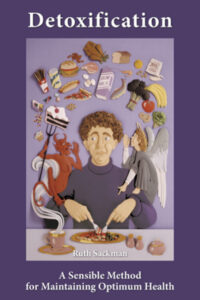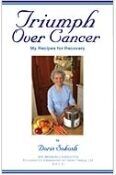
Non-Traditional Approaches to
the Theories, Treatments and Prevention of Cancer

Doris Sokosh Interview on News 12

March 8, 2010

Filed under: Press — Tags: , , , — admin @ 11:43 am

Doris Sokosh tells her story about surviving cancer and being in the film Rethinking Cancer to News 12’s Gillian Neff this past week all while making recipes from her up and coming cook book. WATCH HERE

KALE

Filed under: Foods of the Week, What's New? — admin @ 7:32 am

Kale, and collard, its close relative, are the oldest known members of the cabbage family. Wild cabbage, which strongly resembles kale in its appearance, is still found growing along the European coasts and in North Africa. Kale is native either to the eastern Mediterranean region or to Asia Minor. It is known that man has been eating this vegetable for more than 4000 years.

The word “kale” was first used in Scotland, and is derived from the Greek and Latin words “coles” and “caulis.” These words refer to the whole group of cabbage-like plants. In America, kale was first mentioned in 1669, although it was probably introduced to this continent at an earlier date.

The sulfur compounds that are found in the cabbage family are, of course, also found in kale. These compounds break up easily, and decomposition occurs when kale is cooked too long or at too low a temperature. Overcooking also destroys the flavor.

Kale is on the market all year, but is most abundant through the late fall and winter. The peak months are December through March. Kale comes principally from Virginia, New York, New Jersey, and the Middle Atlantic states.

There are now many varieties of kale, but the crinkly-leaved and the smooth-leaved are the two most popular commercial types. The smooth type is usually referred to as spring kale, and the curly as green Scotch kale, or Siberian blue kale.  Scotch kale are usually crinkled and curled, have a finely divided leaf, and are bright green to yellowish-green in color The leaves of the Siberian kale are flattened and smooth in the center, with curled and ruffled edges, and are of a deep, bluish-green color. Wilted and yellowed leaves should be avoided.

THERAPEUTIC VALUE

Kale is very high in calcium, vitamin A, and iron.  It is good for building up the calcium content of the body, and builds strong teeth.  Kale is beneficial to the digestive and nervous systems.

NUTRIENTS IN ONE POUND

Calories: 117

Protein: 11.3 g

Fat: 1.7 g

Carbohydrates: 21.0 g

Calcium: 655 mg

Phosphorus: 180 mg

Iron: 6.4 mg

Vitamin A: 21,950 I.U.

Thiamine: 0.3 mg

Riboflavin: 0.76 mg

Niacin: 5.8 mg

Ascorbic acid: 335 mg

APRICOT

February 28, 2010

Filed under: Foods of the Week, What's New? — admin @ 4:27 pm

The apricot is said to have originated in China. It spread from there to other parts of Asia, then to Greece and Italy. As early as 1562 there is mention of the apricot in England in Turner’s Herbal.

It is recorded that the apricot grew in abundance in Virginia in the year 1720. In 1792 Vancouver, the explorer, found a fine fruit orchard that included apricots at Santa Clara, California. The fruit was probably brought to California by the Mission Fathers in the eighteenth century.

The apricot is a summer fruit, and is grown in the Western United States.  California produces 97 percent of the commercial apricot crop.  Only about 21 percent of the apricots produced commercially are sold fresh; the remainder are canned, dried, or frozen.

Tree-ripened apricots have the best flavor, but tree-ripened fruit is rarely available in stores, even those close to the orchard.  The next best thing to a well-matured apricot is one that is orange-yellow in color, and plump and juicy.  Immature apricots never attain the right sweetness or flavor.  There are far too many immature apricots on the market.  They are greenish-yellow, the flesh is firm, and they taste sour.  Avoid green and shriveled apricots.

THERAPEUTIC VALUE IN APRICOTS

Apricots may be eaten raw in a soft diet.  Ripe apricots are especially good for very young children and for older people.  This fruit is quite laxative, and rates high in alkalinity.  Apricots also contain cobalt, which is necessary in the treatment of anemic conditions.

Apricots may be pureed for children who are just beginning to eat solid foods.  Apricot whip for dessert is wonderful, and apricots and cream may be used in as many ways as possible.  They make good afternoon and evening snacks.

Dried apricots have six times as much sugar content as the fresh fruit.  Therefore, persons with diabetic conditions must be careful not to eat too much dried apricot.  Because of its sugar content, however, it is good when we need an energy boost.

Dried fruits should be put in cold water and brought to a boil the night before, or permitted to soak all night, before eating.  Bringing the water to a boil kills any germ life that may be on the fruit.  Sweeten only with honey, maple syrup, or natural sugars.

NUTRIENTS IN ONE POUND OF APRICOTS

Calories: 241

Protein: 4.3 g

Fat: 0.4 g

Carbohydrates: 55.1 g

Calcium: 68 mg

Phosphorus: 98 mg

Iron: 2.1 mg

Vitamin A: 11,930 I.U.

Thiamine: 0.13 mg

Riboflavin: 0.17 mg

Niacin: 3.2 mg

Ascorbic acid: 42 mg

Body Talk Health Show-Sheryl Leventhal, M.D

February 24, 2010

Filed under: Press, What's New? — admin @ 10:24 pm

Mimi Stoneburner, host of the Body Talk Health Show on K-tip 1450 radio interviews Sheryl Leventhal, M.D on Rethinking Cancer, health, nutrition and her Oncology and Functional Medicine and medical experience working with patients. Listen Here

Trading chemo for carrot juice, New Canaanite Doris Sokosh triumphed over cancer

February 23, 2010

Filed under: Press — admin @ 9:20 am

New Canaanite Doris Sokosh was on her death bed. That’s what her doctors, family and friends said.

The year was 1972 and Sokosh was 38 years old. Her doctor, who had diagnosed her with terminal breast cancer one year earlier, gently told her that there was nothing more he could do. Read More

Cabbage—an Ancient Food with Timeless Nutritional Value

February 8, 2010

Filed under: Foods of the Week — admin @ 3:55 pm

Cabbage was widely grown in ancient China.  In fact, the workers on the Great Wall so many years ago were fed on cabbage and rice.  When winter came, wine was added to the cabbage to preserve it, producing a sour cabbage pleasant to the taste, which didn’t spoil.  A thousand years later the Tartars under Genghis Khan conquered China and carried sour cabbage with them as they overran other parts of the world.  The vitamin C in cabbage was enough to prevent scurvy, the deficiency disease which killed many soldiers on long marches in ancient times.

When the Tartars came to Eastern Europe they were still eating sour cabbage, but they were preserving it with salt rather than wine.  The Russians, Poles and Austrians tasted this food of their conquerors and liked it.  The Austrians named it sauerkraut.  The Dutch brought cole slaw to America, its name deriving from kool for cabbage and sla for salad: cabbage salad.

Raw cabbage has been known from antiquity as a remedy for drunkenness.  Eating cabbage with vinegar before a drinking bout and after a feast would prevent one from feeling too strongly the effects of the wine or beer.

Pliny, the Roman naturalist, thought the best cabbages were those tiny heads that grow on the stalk after the original big head is picked.  Gardeners who leave the cabbage stalk in the ground usually find these a few weeks later.

Down through the centuries cabbage has been used for just about every purpose industrious herb doctors could experiment with: chronic coughs, colic, constipation, dysentery, toothache, gout, pains in the liver, deafness, insomnia and many other ailments.  Contrarily, some writers on herb medicines declared that cabbage should be avoided because of its tendency to cause flatulence.

Today we know that long cooking produces the sulfur compounds which, in the past, gave cabbage its bad name.  Heat, soaking in water or cooking for too long a time break down the sulfur compounds and create the digestive problems some people have with cabbage.  Serve cabbage raw if you would get the most out of it, nutritionally speaking.  If you must cook it, make it brief—no more than a few minutes in a tiny bit of water.  Shred or chop it finely before cooking, so that this short cooking time will be enough.

Cabbage is one of our best sources of vitamin C—raw, it may contain up to 50 milligrams per serving.  It also contains considerable potassium and vitamin A.  One half cup contains only 10 calories, so it is an excellent “filler” food for the calorie-counter.  A dressing of lemon juice or vinegar adds almost no calories.  Mayonnaise or other oily salad dressing is suitable if you are counting carbohydrate units rather than calories.  When you shred cabbage for slaw for cooking, prepare it as soon as possible before eating.  It loses vitamin C with every additional moment it stands before eating.  Keep the cabbage head in the refrigerator and, if you don’t use it all at one meal, cover the cut side with waxed paper or foil to keep out all air.

Walnutty Slaw

5 cups shredded cabbage

2/3 cup homemade or health store mayonnaise

2 tsp fresh lemon juice

1/2 cup chopped, raw walnuts

Combine first 3 ingredients.  Chill until ready to serve.  Then add nuts, toss and serve.

What Causes Cancer?

January 28, 2010

After examining data on 44,788 pairs of twins, researchers report that, in most cases, environmental factors have the greatest effect on cancer risk. As reported in New England Journal of Medicine, researchers studied twins listed in Swedish, Danish, and Finnish registries, concluding that inherited genetic factors make a minimal contribution to cancer risk.

Heredity was judged to play no detectable role in cervical or uterine cancer. For lung cancer, genetics accounted for 26 percent risk. The remainder is due to environmental factors, such as smoking and other dangerous exposures. For cancers of the breast, ovary and prostate, the environmental component was estimated at 73 percent, 78 percent, and 58 percent, respectively.

Lichtenstein P, Holm NV, Verkasalo PK, et al. Environmental and heritable factors in the causation of cancer. N Engl J Med. 2000;343:78-85.

Knowing What’s Worth Paying For in Vitamins

January 10, 2010

Filed under: What's New? — admin @ 5:58 pm

“Of course, it is controversial whether we should be taking vitamins at all. Recent studies have indicated that taking a multivitamin will not protect you from heart disease or cancer. And experts maintain that if you eat well, you do not need vitamin supplements.” Read on

By Lesley Alderman

F.A.C.T. Comment:

This reporter is on the right track, though not as far along as we would like. In F.A.C.T’s experience, promiscuously popping supplements, as so many are doing these days, is a waste of money and potentially harmful to your health!

Supplements have become big business, but most are poorly absorbed because they’re extracted from their natural setting, i.e., food or synthetically manufactured, and loaded with additives — binders, preservatives, dyes, etc. — which waste precious bodily energy in extra elimination efforts. When nutrients are isolated from the essential synergism Nature has created, the body will steal from other tissues and bones in its attempt to metabolize competently. This can cause serious deficiencies over time.

Hi-dose or megadose supplements use nutrients (usually synthetically produced, e.g., ascorbic acid instead of natural Vitamin C) as drugs for short-term symptom relief. They are unbalancing and antithetical to the whole idea of natural healing.  As Hippocrates said, “All excesses are inimical to Nature.”

The typical rational for all these pills is that the soil has been so depleted of nutrients due to chemical fertilizers, monocropping, etc., that food is not enough.  We strongly disagree! Food is what the body is best adapted for over thousands of years. A well-balanced plant-based, preferably organically grown diet will gradually restore the proper nutrient balance. Gradually is the key word. Nature works best in a gentle, unhurried way.

If an individual is found to have a specific vitamin or mineral deficiency, there are high quality food form supplements which may be helpful for a short time until the diet brings about the correction. Also, as we age, the body tends to produce fewer digestive enzymes, so we generally recommend a good digestive enzyme supplement before meals, especially for cooked food.  Osteoporosis, the big bugaboo these days, can actually be caused by isolated calcium in supplements because the body robs from the bones to find the other elements needed for absorption.  But Nature is no dummy! Calcium is so important, Nature has made sure to provide this mineral in ample amounts throughout the food supply. The problem is often weak thyroid function, which negatively impacts one of the big jobs of this gland: to facilitate calcium metabolism. Because abnormal thyroid function is so common in today’s polluted environment, we suggest periodic thyroid testing. A hypo or hyper-thyroid can be normalized by good quality glandular supplements or Armour’s Thyroid, a natural substance.

In short, our suggestion: know what your looking for when you venture into the supplement section of your grocery store, but spend the bulk of your food dollars on good food!

Cancer From the Kitchen?

Filed under: What's New? — admin @ 5:50 pm

What if breast cancer in the United States has less to do with insurance or mammograms and more to do with contaminants in our water or air — or in certain plastic containers in our kitchens? What if the surge in asthma and childhood leukemia reflect, in part, the poisons we impose upon ourselves? Read on

By Nicholas D. Kristof

F.A.C.T. Comment:

This OpEd piece was the most emailed New York Times article in the 30 days following publication-and deservedly so!

The research, accumulating over the last 50 years, was first presented to the public-at-large in a fascinating 1996 book, Our Stolen Future by Theo Colborn, ph.D., with a forward by Al Gore.  Dr. Colborn, a zoologist, was the first to really tie together all the weird wildlife deformities and abnormal behaviors being reported around the world: turtles born without eyes, birds with extra beaks, gender confusion in the way males and females related to their young, and on and on. Ms. Colborn discovered that the common denominator in all the cases was exposure to synthetic chemicals, particularly organochlorines, ubiquitous in plastics, pesticides and many other “essentials” of modern life.  Minute amounts of these chemicals can mimic hormones in our bodies and, thus, interfere with the normal course of development — with potential effects on virtually all aspects of bodily function. They were given various labels, like “endocrine disruptors, “estrogen mimics,” “gender benders.”

Dr. Colborn warned that it was only logical that humans, too, were being affected. Unfortunately, the public was skeptical, Congress did nothing and here we are over a decade later with more evidence and no substantial change in public policy. Perhaps now the public, more attuned to the increasing rates of hormone-related cancers and man’s impact on the environment re: global climate change, is ready to listen and demand action. So bravo, Mr. Kristof. You may have ignited a movement!


TO SCREEN OR NOT TO SCREEN?

December 10, 2009

The current hullabaloo about new recommendations to delay the use of mammograms and Pap smears is just part of a huge debate afoot in the medical establishment about the value of cancer screening tests in general-mammography, PSA, Pap Test, CT Scan, etc. There is widening concern that too often false-positives result or non-threatening tumors may be discovered, leading to more costly, invasive testing, unnecessary toxic treatment and undue stress. What is a responsible medical consumer supposed to do?

F.A.C.T. ’s position has always been that these tests are too invasive, too often inaccurate, too expensive and far too limited in scope to be of any real value. Because we view cancer as a systemic disease — not just the tumor or cancer cells — we believe it is more logical to focus on detecting — and correcting — any imbalance in the body chemistry that could be the cause of abnormal cell production. This is why we have long recommended the Human Chorionic Gonatrophin (HCG) Urine Immunoassay — developed in 1957 by Manual Navarro, M.D. and used successfully by many cancer patients on a biorepair program for early detection and to monitor their progress.

To learn more about the scientific basis and purpose of this test, including easy instructions for individuals to prepare a sample for quantitative analysis, read this:

HCG Test — A Non-Invasive Diagnostic for Cancer (downloadable pdf)

Older Posts »

Get the DVD

Receive Rethinking Cancer on DVD for $19.95 plus shipping and handling.

Rethinking Cancer Trailer

Donate to F.A.C.T.

Get the Book

Rethinking Cancer, by Ruth Sackman, is an excellent companion book to the film. Learn More

Bookmark and Share

Join the Community

Receive news and updates